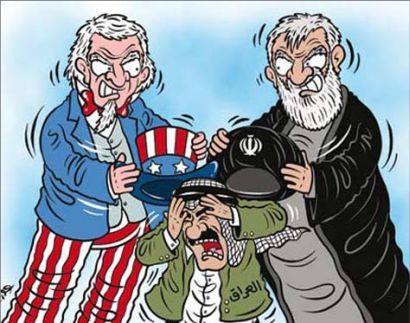
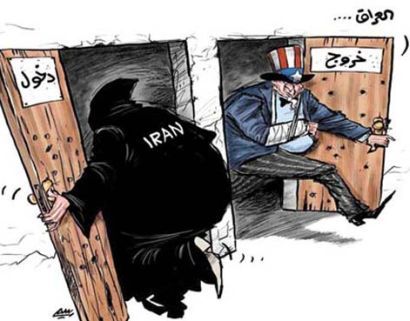
"From
now on, training the Iraqi police will fall to the Department of State, and
military bases in Iraq will be replaced by consulates. Since Hillary Clinton
doesn't have her own troops, she'll use the services of mercenaries, armed with
helicopters and armored personnel carriers. … But as nature abhors a vacuum, al-Qaeda
announced with a coordinated bombing attack that its mission in Iraq is far
from over."
Washington: August
31st marks the official or, to be precise, the formal end of America's “Operation
Iraqi Freedom,” and the beginning of “Operation New Dawn.” This was announced
by U.S. President Barack Obama in an address to the nation from the Oval Office
of the White House. Officially, or again, formally, this means the end of
America's aggressive war in Iraq, which lasted over seven years (since March
2003), cost the lives of 4,400 Americans and 150,000 Iraqis, and cost
Washington almost $1 trillion a year. Two million Iraqis became refuges and
40,000American soldiers were wounded.
The basic parameters of war’s
end are these: of the 140,000 American troops once stationed in Iraq, 90,000
have left. Some were redeployed to Kuwait and to naval and other bases in the Persian
Gulf, and some were returned to their homeland. About 50,000 soldiers remain in
Iraq and as of August 31, have been rechristened “advisers,” in keeping with
the essence of operation “New Dawn,” which is to “advise
and assist.”
To emphasize the end of the war,
the president transferred many functions of Pentagon in Iraq to … the State Department.
From now on, training the Iraqi police will fall to the Department of State and
military bases in Iraq will be replaced by consulates. Since Hillary Clinton
doesn't have her own troops, she'll use the services of mercenaries, armed with
helicopters and armored personnel carriers.
The war is over, but the mission has not been concluded. The terrorist acts committed at the same time on the same day - August 25th - in thirteen Iraqi cities, stubbornly and ominously reminded America, Iraq and the whole world of this fact. These are the kind of fireworks with which Iraq bid farewell to the last personnel carrier with the last brigade aboard. But as nature abhors a vacuum, al-Qaeda announced with a coordinated
bombing attack that its mission in Iraq is far from over, and that it doesn't
intend to leave.
Iraq got rid of the bloody
tyrant Saddam Hussein. This is probably the most positive thing that can be
said of the U.S. war in Iraq. Then begins a gray zone highlighted by minuses.
Washington insists that it “laid the foundation” for the democratic development
of Iraq. But it will soon be six months since the national elections, and the
country is still without a government. Vitally important laws regarding oil in
Kirkuk have not been adopted. Shiites and Sunnis are again on the verge of clawing
at each other’s throats. The Kurds, left without the American shield, could
commit a fatal act - taking control of the disputed land and declaring
independence. As a result of the war, Iran's influence has grown. The Iraqi
armed forces and police aren't yet ready to carry out their functions.
Insurgent and terrorist activity has been strengthened.
The world also saw something
else - the limited impact of American might as a conductor of the Pax
Americana, especially in remote regions like the Middle East and
Central Asia. One shouldn't forget that the end of hostilities in Iraq
coincides with a worsening economic situation in the U.S. and the entry into
the international arena of two new superpowers - China and India. And then
there's the war in Afghanistan, which is dragging on and has become more complicated.
For Bush, the wars in Iraq and Afghanistan were the central events of his
presidency. For Obama they are “problems
that need managing.” His own mission, as he sees it, is the “transformation
of America.” Wars “distract” him from this mission and swallow up resources
that could be invested in its implementation.
In March during his only trip
so far to Afghanistan, Obama met a 19-year-old soldier who lost both legs and
an arm. Conversation with him shocked the president. Talking to generals about the
meeting, he
noted with vexation: “We have a lot of kids on the ground acting like
adults and we have a lot of adults in this room acting like kids.” In December
of last year, Obama
visited the Air Force base in Dover, Delaware, which receives coffins with the
remains of dead G.I.s. "One trip to Dover would be enough to cause me to bring every
soldier home. O.K. Obama said that visiting the
morgue and military hospitals in Dover left him speechless. But on August 31st
he was forced to overcome it and talk to his people.
*MelorSturua is an award-winning Soviet and Russian
journalist. He now resides in Minnesota