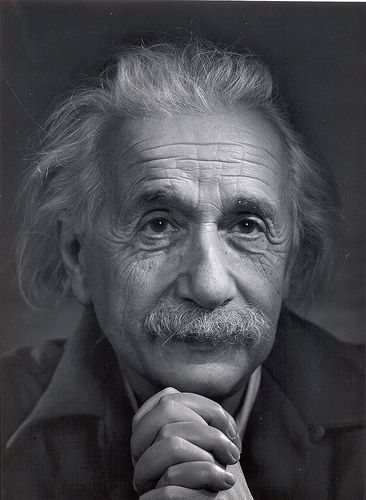
Albert
Einstein: One of the many great minds that fled
Germany
only to be embraced by the United States.
Nan Fang Daily, People's
Republic of China
America Should
Thank Hitler for Its Strength
Is America's global dominance based
on its policy of absorbing Germany's greatest minds before, during and after World War
II? According to Ding Dong, a man whose name sounds like a wake-up call and is described as a ‘Beijing Scholar’ by the China's state-controlled Nan Fang Daily, America’s wartime absorption of European Jewry should be a lesson for Beijing. The scholar then makes the bold statement that this should also induce China to allow far greater academic freedom, which is what permitted these immigrant intellectuals to make America what it is today.
By Ding Dong (丁东), a Beijing Scholar
Translated By Mark
Klingman
December 20, 2010
People's Republic of China - NF Daily -
Original Article (Chinese)
The United States is
undoubtedly the center of the scientific and educational world today. Who made the
U.S. such a center? If one were to answer Hitler, some people would find
it inconceivable. But that is indeed the case. As one American scientist put
it, "We ought to erect a monument to Hitler to thank him for promoting the
development of science and culture in the U.S."!
In Germany before Hitler, the
world's center of science and education was not the U.S. - it was Germany. By
the second half of the 19th century, Germany had entered a golden age of science
and education, surpassing Britain and France as the world's scientific and
cultural center. Entering the 20th century, the United States became the
world's largest economy, but in science and education, German students
were still number one.
Take the Nobel Prizes in
physics, chemistry and physiology for example: as of 1933 there were 32 German winners,
but only 5 from the United States. When Hitler came to power and implemented
his racist policies, 500,000 Jews were forced into exile, with the U.S.
received a quarter of these refugees. Being in America offered the intellectual
elite of the group an atmosphere to put their talents to use. This resulted in
a great intercontinental realignment of the world's scientific and cultural heart
from Europe to North America - and from Germany to the United States. By the
time World War II ended in 1945, Germany had only 14 Nobel Prize winners left
alive in the categories mentioned, while the U.S. had 25. The intellectual
elite that came out of Germany's centers of learning and sent to the United
States studied under the most advanced and rigorous study methodologies and laid
the groundwork for the U.S. to hold the leading position in science education.
Today, there are more than 200 American Nobel Prize winners in the natural
sciences, and some years, American scientists sweep the awards fir all three
natural sciences.
Chinese scholars know little of
the history behind this transfer of science and technology, and even less have
they done specialized research on the subject. Wuhan University history
professor Li Gongzhen's book Culture of
Exile: Refugees of the Nazi Era in Europe fills this gap. Ten years in the writing,
the book offers an orderly and detailed analysis of questions like: Why did
Hitler incite racism? Why did he persecute the Jews when he took office? Why
did he allow the Jewish "brain drain"? How were the policies of other
countries implemented with respect to intellectual Jewish refugees? What was
the public's stance on these gifted refugees? What kinds of living conditions
were provided for their development? How did the refugees adapt to the environment
in the receiving country? What kind of impact did they have on the society of
countries that took them in?
Racism was at the core of
Hitler's ideology, as well as that of the Nazi Party. Relying on incitement to
racism during his rise, Hitler seized on the nationalist feelings of the German
people and their longing for a turnaround after defeat in the First World War.
Taking power in 1933, he immediately undertook a campaign of cultural
cleansing, wantonly tormenting Jews and expelling "non-Aryan"
scholars, driving out all Jewish scientists from their institutions and even
the country. By 1937, German universities had lost 39 percent of their teaching
staffs, and by the outbreak of World War II in 1939, 45 percent of all
university instructors were Nazi Party officials. Hitler's crazy short term
behavior, with the cooperation of mainstream German society, did grievous harm
to the long-term vitality of the country's science education and cultural
vitality.
Jewish refugees fled to more
than 75 countries for their very survival, but in the end, only the United States
received large numbers who were permitted to put down roots and make
significant contributions to science and culture, thus becoming their biggest
beneficiary. The reasons for this are very intriguing.
The destination of choice for
Jewish refugees was certainly not the United States, but rather European
countries that were closer to them physically and culturally. The U.S., after
all, lay far across the vast Atlantic, and given the travel conditions at the
time, seeking refuge there was far from easy. But for a number of reasons, many
European countries, including their scientific and cultural elites, couldn't
accommodate Jewish refugees. Switzerland, for example, was a neutral country
with German as the main language, and certainly would have been preferable for
the Jewish intellectual elite. But Switzerland had serious unemployment problems,
and people feared that the Jewish refugees would compete for the few jobs there
were. The government therefore imposed a regulation that foreigners could not
engage in a profitable occupation, and strictly forbade employing refugees.
This meant that scientists in exile couldn't adopt Switzerland as a platform
for development; they could only use it as a transit point.
Another example is Canada,
which, at it is sparsely populated, didn't reject the European immigrants outright.
But Canada had a clear bias in its selection of immigrants: they preferred
those willing to work as cheap labor in its mines, forests, and factories,
rather than become part of the intellectual elite. "Between an artist and
a farmer, a writer and a logger, a poet and a miner, a scholar and a mason, the
Canadian government didn't hesitate to choose the latter in every case."
This caused Canada to reject a large number of asylum applications from
scientists, artists, bankers, professors, lawyers and doctors. It was even
feared that if the government showed any flexibility, every Canadian university
would be filled with refugees. Renowned German physicist Gerhard Herzberg was
deported from Germany for having a Jewish wife and found a teaching job at a
Canadian university. Because his salary was paid by the U.S., Canadian
immigration allowed him to enter on a two-year visa. After two years they
wanted to force him out, and only the most strenuous efforts from his school
allowed him to remain. Ten years later, Herzberg was able to obtain Canadian
citizenship, and in 1971 became Canada's first Nobel Prize winner.
Turkey was one of the few
countries to welcome Jewish intellectual refugees. More than 190 scientists and
artists in exile entered Turkey's universities, greatly enhancing the standard
of science education in that nation. Unfortunately, President Ataturk's
death in 1938 interrupted this process.
In contrast, the U.S. was the
most attractive and tolerant of Jewish intellectual refugees, providing them
with a wide stage on which to display their intelligence. American scientific
and cultural leaders had extraordinary foresight, seeing keenly that absorbing
the knowledge from Europe's intellectual elite refugees would have an enormous
impact on the development of science and culture in America. In fact, they not
only showed sympathy for the persecuted Jews, but even made efforts to
counteract Americans' latent xenophobia and anti-Semitism. It's particularly noteworthy
that allowing the intellectual refugees to settle and put their abilities to
use was more the doing of American society than its government.
As the book says, "The
real contribution was rendered not by the Roosevelt Administration, but rather by
visionary intellectual leaders, private foundations and various
non-governmental aid organizations. It was precisely because of their efforts,
that the United States was not only the largest recipient of Jewish refugees,
but of Jewish intellectuals, which partly consisted of 1,090 scientists (the
vast majority of them professors), 811 lawyers, 2,352 doctors, 682 journalists,
645 engineers, 465 musicians, 296 artists, and 1,281 writers and professionals
from other fields. The U.S. received at least 63 percent of the 12,000
"cultural elite" expelled by Germany and Austria, and at least 77
percent of the approximately 1,400 scientists. It might be said that a
veritable galaxy of stars was exiled to the U.S. from Europe, including founder
of the theory of relativity,
Albert Einstein,
"father of the computer" John von Neumann,
"father of modern aerospace" Theodore von Karman,
"father of the atomic bomb" Leo Szilard, "father
of the hydrogen bomb" Edward
Teller, physicists Niels
Bohr and Enrico Fermi,
mathematician Richard
Courant, modern architect Ludwig Mies van
der Rohe, musicians Arnold
Schoenberg and Igor
Stravinsky, sociologist Paul Lazarsfeld,
political scientist Hannah
Arendt, and many more.
America has always had an environment of cultural inclusion and free
competition, and at a time when science, education, and culture were all on the
rise, it might be said that having these world-class intellectuals "on the
team" put America in the fast lane to scientific and cultural dominance. The successful absorption of Europe's intellectual
refugees gave the U.S. a taste for more. Since then, American has more
self-consciously developed openings to the global elite of science and education.
The door of communication and immigration has always been wide open, as is the
door for young talent to find study and employment opportunities. This has been
one of the secrets to America's world leadership since World War II.
Posted by WORLDMEETS.US
In his youth during the Cultural Revolution,
Professor Li Gongzhen witnessed the destruction of science education in China,
and today has experienced the distorting and corrosive effect of power and
money on Chinese higher education. Now, in surveying the globe, he has found that
the success or failure of other countries has been rooted in their
psychological power. He offers unique insights into questions of strategic social
and economic development. His notion is that America’s independent model for developing
science education that results in revitalization can be called "Science Education
Leads to a Country's Prosperity (kejiao
xingguo)." And the 19th century German model, when Kaiser Wilhelm
invested universities with state moneys without interfering with academic
freedom and leading to Germany's rise can be called "A Country's Prosperity
Leads to Science Education (guoxing
kejiao)."
Hitler's Third Reich was
neither of these. Rather, it represented the decline of German science
education. China's economy has developed rapidly in recent years, and the
slogan kejiao xingguo has been heard
for many years. But although investment in higher education and research is
burgeoning, respect for academic freedom still lags behind. Administrators hold
all the influence, so that flatterers of power and money are the ones who rise.
The atmosphere at Chinese universities is growing ever-more corrupt. Professor
Li Gongzhen's revelation to the Chinese people is this: we should learn from
the experiences of other nations to benefit China.
CLICK HERE FOR CHINESE VERSION
Powered by Disqus
[Posted by WORLDMEETS.US January 18,
10:07pm]